

FIA links Sepang stoppages to power loss under wet-weather limit
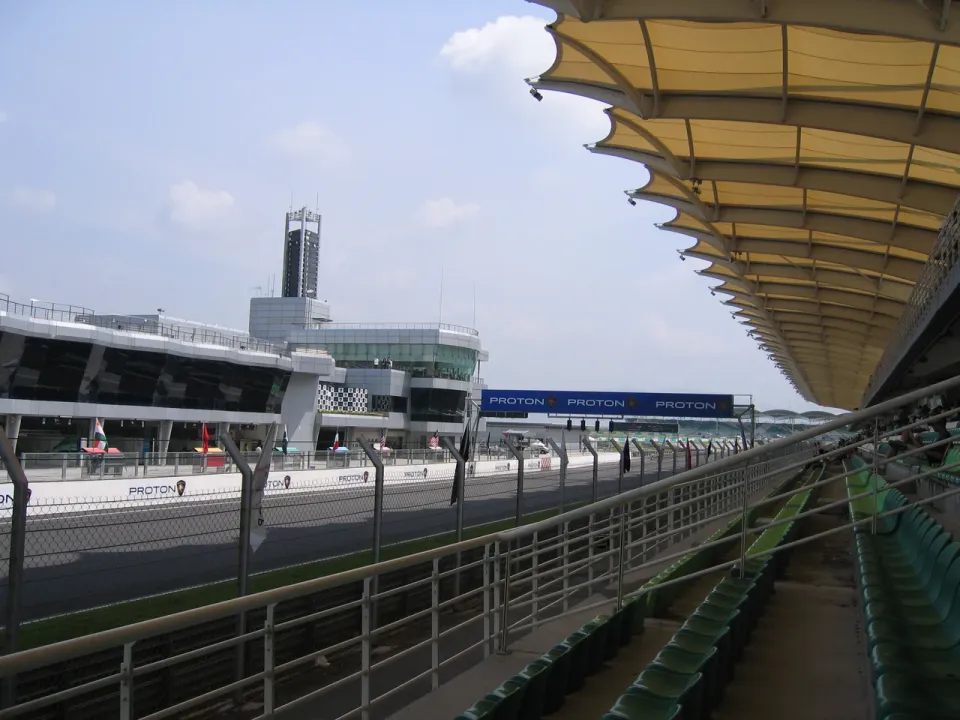
Archive photograph: Sepang International Circuit · main straight and grandstands, 2007 · 2007-11-25Archive photo · 2007-11-25 · mondayblues · CC BY-SA 3.0
The FIA traced the Sepang formation-lap stoppages to excessive power loss at low engine speeds under its 250 kW wet-weather limit. The emergency configuration will return in Singapore if similar conditions are expected, with a further update planned for the United States Grand Prix on 25 October.
Several cars suffered power-unit problems during the formation lap of the Bahrain Grand Prix, held at Sepang in Malaysia, and some stopped on track. Rain had already delayed the lap by about 40 minutes; the problems then held up the start further. The FIA’s completed review found that some cars at low engine speeds in certain sectors under its 250 kW wet-weather reduction lost more power than intended and could not recover it in those sectors.
The disruption was linked to software governing the wet-weather limit. In the slowest parts of the circuit, a bug put the electric motors into lock-down, leaving no electric power to offset turbo lag when drivers pressed the throttle.
Before the restart, the FIA sent teams and power-unit manufacturers an emergency software update. It lifted the 250 kW restrictions in the affected mini-sectors.
For Singapore, the FIA says the same temporary configuration will be reinstated if similar weather conditions are expected. It also plans a further wet-weather software update for the United States Grand Prix on 25 October.
After the incident, FIA single-seater director Nikolas Tombazis had indicated that the software had not been tested sufficiently because of the lack of wet-weather running in 2026. The FIA later clarified that teams and power-unit manufacturers had run simulations and full-scale tests during FP1 at the Belgian and Dutch Grands Prix. The problem did not surface there; the cars were running at normal speeds, not the very low speeds encountered behind the safety car in Malaysia.
The FIA says it will strengthen software testing and verification with teams, power-unit manufacturers and the supplier of the standardised ECU, including independent assessment and collaborative feedback. It acknowledged that testing opportunities are limited.
Sources 03
- SOURCEFIA completes investigation into F1 chaos in Malaysia and announces measuresAutosport
- SOURCEFIA completes investigation into F1 chaos in Malaysia – and reveals next stepsMotorsport.com F1
- SOURCEFIA reveal findings after review into Sepang formation lap bugRacingNews365 English
This article was produced with AI assistance. Source references make its supporting evidence traceable.