

Mercedes still working to understand why upgraded W17 struggled at Sepang
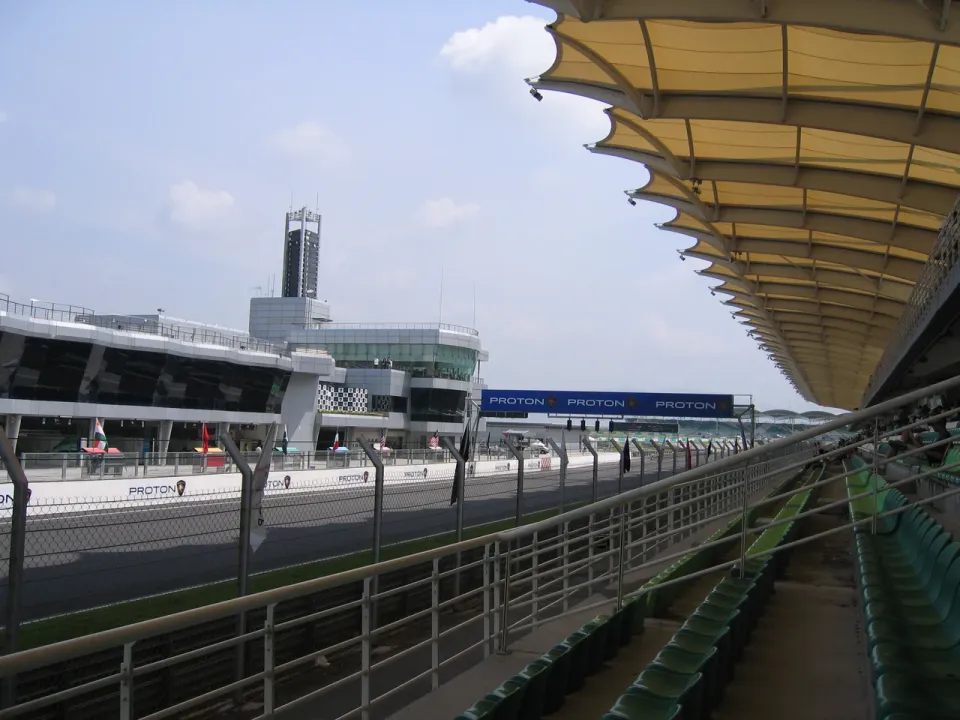
Archive photograph: Sepang International Circuit · main straight and grandstands, 2007 · 2007-11-25Archive photo · 2007-11-25 · mondayblues · CC BY-SA 3.0
GPBeat reports that Mercedes struggled particularly in slow corners with its revised W17 at the 2026 Bahrain Grand Prix in Malaysia. Deputy team principal Bradley Lord said the update, track temperature and surface may have interacted; Mercedes was continuing its assessment in Singapore.
Mercedes brought a revised floor and sidepod package to Sepang for Formula 1’s first visit there in nine years, but the W17 struggled to match its usual pace at the 2026 Bahrain Grand Prix in Malaysia, particularly in slower corners. The team said it was happy with the update’s performance in higher-speed corners.
In Mercedes’ post-race debrief, deputy team principal Bradley Lord said the update, track temperature and circuit surface may have interacted, leaving the car behaving unusually. He said drivers had to use the throttle to turn the car in slow corners, worsening the tyre-temperature challenge.
Mercedes had been on course for a double podium before George Russell retired with a powertrain issue. Lord said the initial inspection found a mechanical failure on the power-unit side, but the precise cause still had to be determined.
Lord said Mercedes was working at the factory and in Singapore to decide its next steps. The aim, he said, was to establish whether the update was working well and whether development was on the right track for the 2026 car and the 2027 programme.
GPBeat analysis: Sepang’s surface could affect the W17 through both the tyres and the airflow beneath the car. A tyre deforms as it fills gaps in the road; repeated loading and unloading of its contact patch generate heat, offering one possible link to the tyre-temperature challenge Lord described.
Surface texture may also alter airflow beneath the car. If that airflow is accelerated to help produce downforce, a change in the flow could alter the car’s aerodynamic load, giving the surface a second possible route to influence the W17’s cornering behaviour.
Sources 01
- SOURCEThe mechanisms at play behind Mercedes' difficult Bahrain GP weekendMotorsport.com F1
This article was produced with AI assistance. Source references make its supporting evidence traceable.
Read also
Schiff warns Mercedes power-unit problems could cost Antonelli more wins
Why Sepang made Mercedes’ F1 upgrade hard to judge
Antonelli: Mercedes still cannot judge its Sepang upgrade
Antonelli’s first title chance in Austin meets Verstappen’s Red Bull surge
Mercedes radio show revisits triple-header and engineering challenges