

Why Mexico’s 2026 F1 lap times came unusually close to 2025 benchmarks
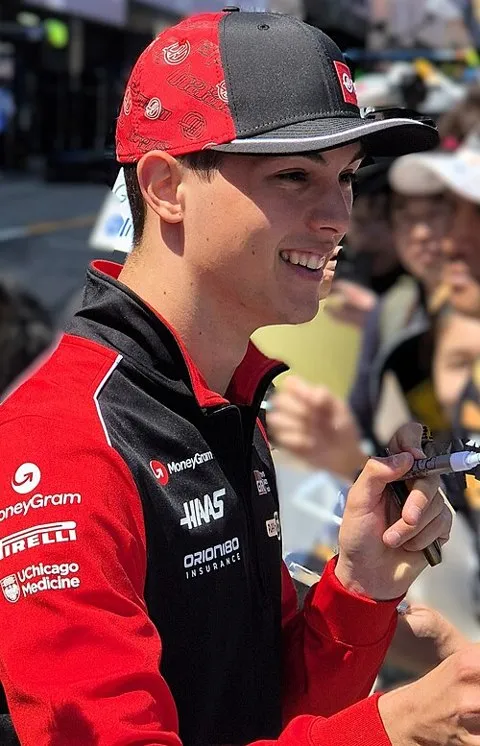
Archive photograph: Charles Leclerc · 2026-05-13Archive photo · 2026-05-13 · Gabriel Hutchinson · CC BY-SA 4.0
Charles Leclerc’s 2026 Mexico FP1 time beat his 2025 benchmark, and his FP2 lap was 0.435 seconds off Max Verstappen’s 2025 time. Pirelli chief engineer Simone Berra attributed part of the close comparison to the track’s condition and said altitude favored the new cars; the gap widened later in warmer sessions.
The 2026 Mexico City Grand Prix produced an unusually close comparison with 2025 lap times, even though the 2026 cars were generally slower per lap. Charles Leclerc’s 2026 FP1 time of 1:18.128 on Friday was 0.252 seconds faster than his 2025 FP1 time of 1:18.380; his 2026 FP2 time of 1:17.827 was 0.435 seconds off Max Verstappen’s 2025 FP2 time of 1:17.392. Pirelli chief engineer Simone Berra attributed part of the closeness to the track being in better condition and said altitude favored the 2026 cars.
The closeness did not persist through every session. By FP3 and qualifying, the gap had widened as most of the grid struggled to manage Pirelli’s C5 soft tyre in higher ambient temperatures. Lewis Hamilton’s 2026 pole time of 1:16.514 was 0.928 seconds slower than Lando Norris’s 2025 pole time of 1:15.586. In Belgium, Kimi Antonelli’s 2026 pole was almost four seconds off Norris’s 2025 pole.
Mexico’s altitude was only part of the explanation. The thinner air significantly affected straight-line speeds, but the available electrical charge imposed a hard cap on top speeds down the main straight. Berra said altitude favored the 2026 cars over the 2025 generation: the older cars lost more downforce under those conditions, and the engine could push more than at sea level.
Track evolution contributed as well. A section between Turn 10 and Turn 1 had been resurfaced, and the support categories—Masters Historic, GTM Super Copa and Formula 4 NACAM—ran before FP1 and between Friday’s two F1 practice sessions. That schedule helped condition a surface that is usually green at the start of a Grand Prix weekend; Berra said the track was in better condition in 2026 than in 2025.
The 2026 regulations were not designed to make the cars faster than the 2025 generation; lap times tend to fall as development continues.