

F1’s Interlagos guide: 15 turns, 71 laps and fast-changing weather
Formula 1 · temporary class logo on blackOfficial class logo
Formula 1’s circuit guide pairs Interlagos’s short 4.309km lap with a 71-lap race, changeable weather and the circuit’s Straight Mode and Overtake Mode zones.
Formula 1’s guide to the Autódromo José Carlos Pace, published ahead of Brazil’s Round 20, sets out a striking contrast: Interlagos is one of F1’s shorter circuits at 4.309km, yet the Grand Prix covers 71 laps and 305.879km. Each lap has 15 turns. Valtteri Bottas holds the lap record at 1:10.540, set in 2018.
At 765m elevation, Interlagos is one of the calendar’s three highest-elevation circuits. Its anti-clockwise layout, extreme elevation changes and weather that can swing from bright sunshine to heavy rain within minutes make it one of the season’s most demanding venues. The rapid shifts also complicate tyre choice. Even so, the circuit offers plenty of passing opportunities: it produced the most passes of any event in 2021 and 2022.
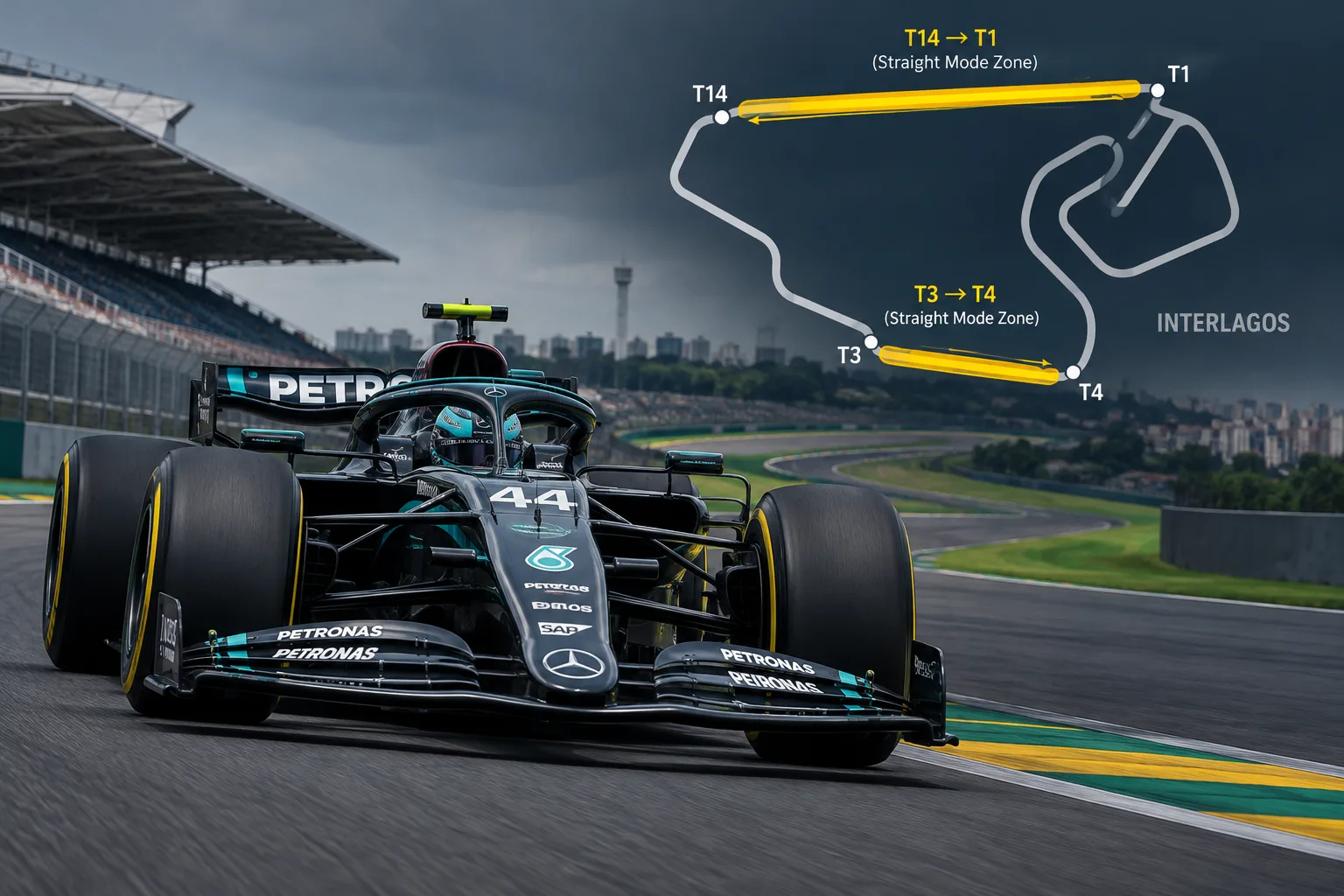
Straight Mode reduces drag and is used in two designated zones on every dry lap: from the exit of Turn 14 to Turn 1, and between Turns 3 and 4. Overtake Mode provides an additional electrical power profile to sustain higher speed for longer. Its detection point is just after Turn 12, with the activation line at the exit of Turn 13; drivers within a second of the car ahead at detection can use it on the following lap.
Former Renault F1 driver Jolyon Palmer says the first corner allows drivers to brake later than they might expect, but braking too late risks locking the front-left. At the final corner, Palmer says, exit speed carries the car up the long straight; too much kerb can unsettle it and cost speed.
Brazil’s first F1 championship event was held at Interlagos in 1973. Carlos Pace won there in 1975; the circuit was named for him in 1985.
Sources 01
- PRIMARY SOURCEEverything you need to know about the Autodromo Jose Carlos PaceFormula 1