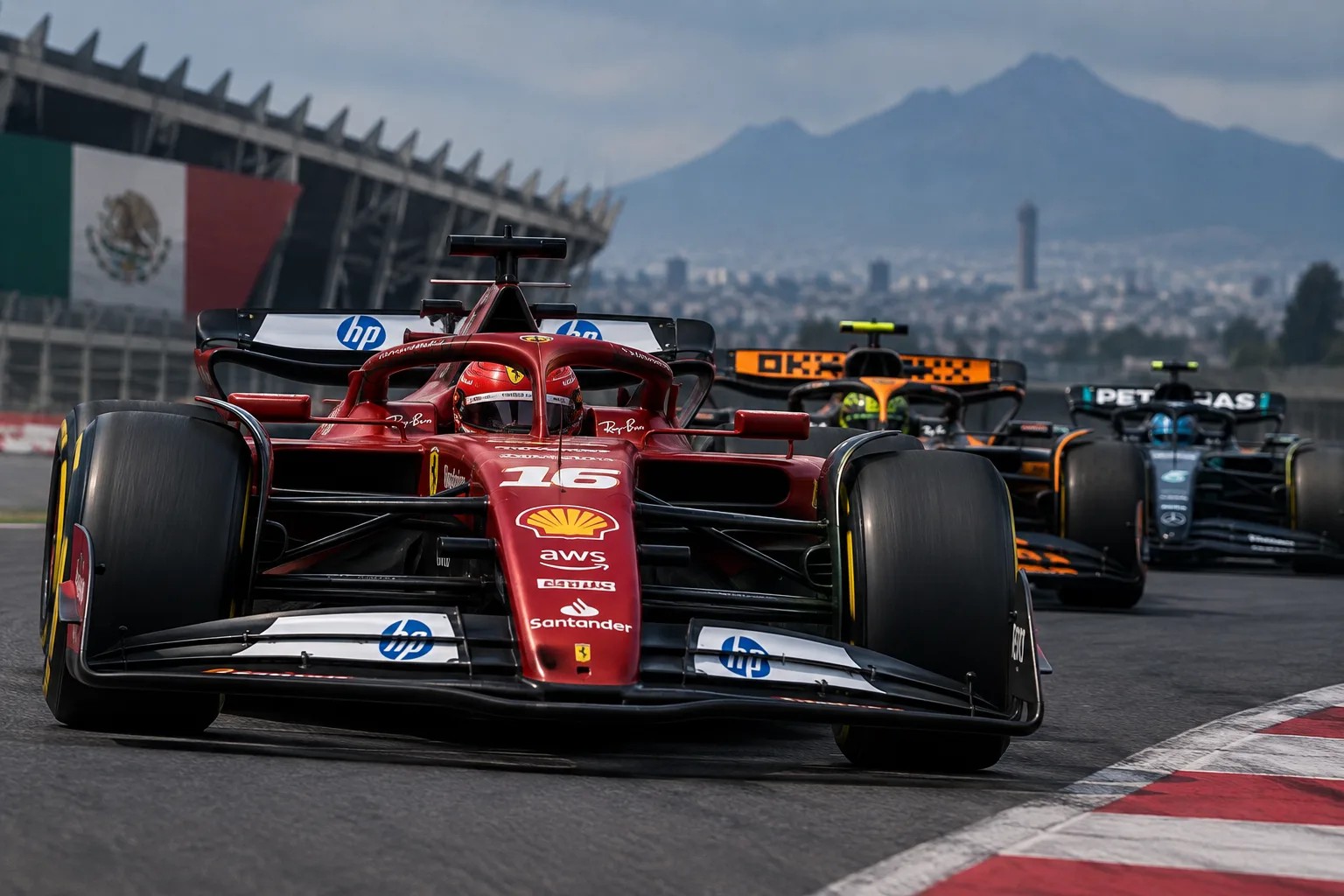


Mexico City's thin air tests F1 cars and drivers
Formula 1 · temporary class logo on blackOfficial class logo
F1.com’s circuit guide describes altitude as the defining challenge at the Autódromo Hermanos Rodríguez, affecting the cars’ aerodynamics and cooling, drivers’ physical demands and straight-line speed.
F1.com’s circuit guide for the Mexico City Grand Prix identifies altitude as the main challenge at the Autódromo Hermanos Rodríguez. More than 2,200 metres above sea level, the track is F1’s highest; thin air affects downforce and cooling, changes the physical demands on drivers and also enables exceptional speeds on the main straight.
Former Renault driver Jolyon Palmer says the thin air leads teams to run maximum downforce, yet the car still feels low on grip and on the edge.
That straight-line pace was on display in 2025, when Oscar Piastri recorded a top speed of 363 kph on the main straight. The circuit takes drivers along long straights and through technical chicanes before the Foro Sol stadium and the remains of the historic Peraltada corner.
The 4.304-kilometre circuit has 17 turns and the Grand Prix covers 71 laps. In 2026, F1’s low-drag Straight Mode is used on dry laps in three zones: the start/finish straight, between Turns 3 and 4, and between Turns 11 and 12.
Sources 01
- PRIMARY SOURCEEverything you need to know about the Autodromo Hermanos RodriguezFormula 1
This article was produced with AI assistance. Source references make its supporting evidence traceable.