

Singapore’s STEM Racing final tests more than speed
Formula 1 · temporary class logo on blackOfficial class logo
The 2026 World Final drew 91 teams from 36 countries. Students built CO₂-powered miniature cars and handled the commercial and presentation tasks of a motorsport team; alumni have gone on to F1 roles, although the competition is no direct route into the sport.
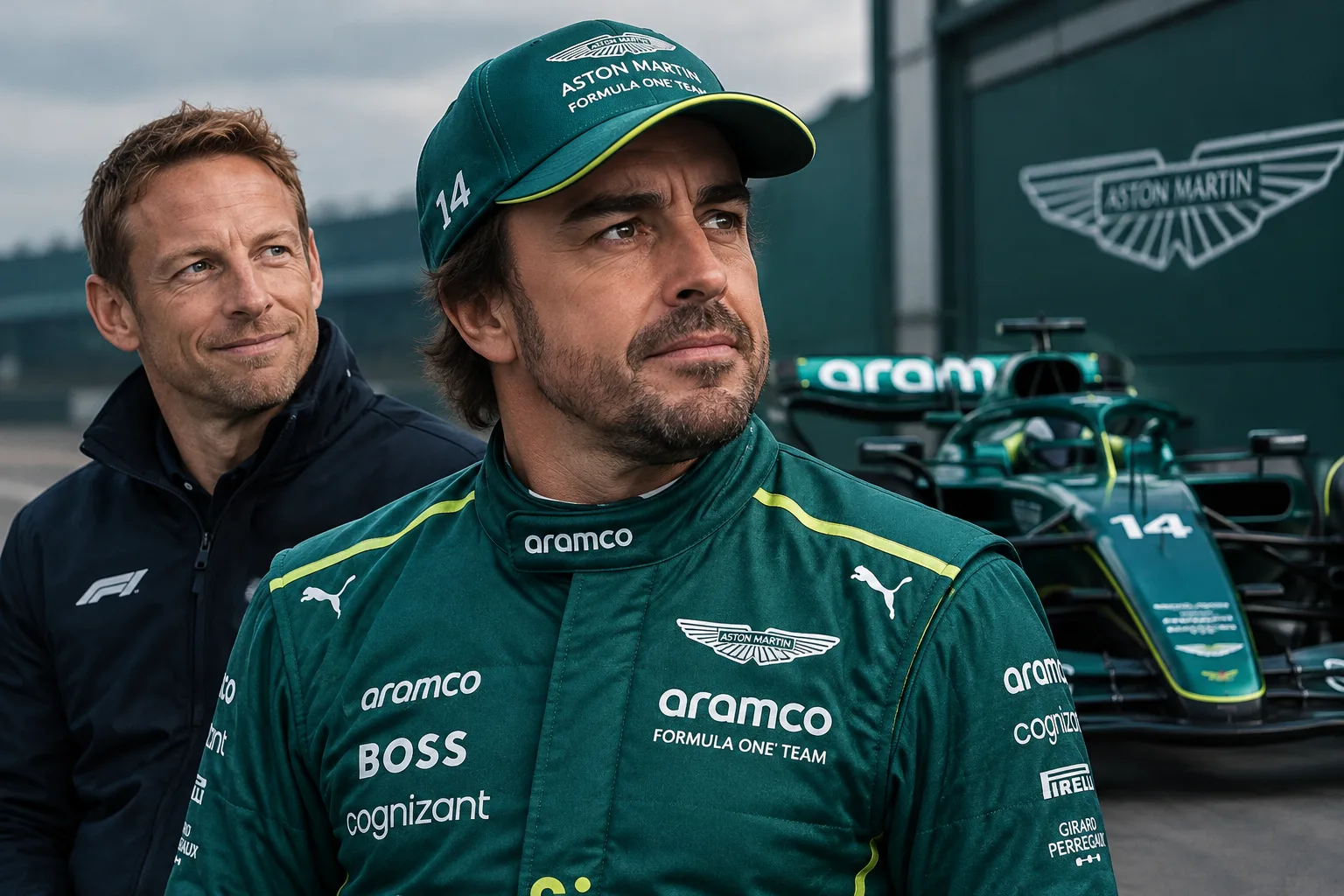
Team Lynx Racing won the 2026 STEM Racing World Final with miniature cars and received its trophy on the Singapore Grand Prix podium. The six Saudi Arabian high-school students—four boys and two girls—competed in the four-day international final, held in Singapore during the week before the Grand Prix. They also met two-time world champion Fernando Alonso and toured the Aston Martin garage.
The 2026 edition was the biggest yet, with 91 teams from 36 countries. The competition began in 2000 under the F1 in Schools name. Teams of three to six students design and build miniature Formula 1 cars powered by CO₂ cartridges, then launch them down a 20-metre track at speeds of up to 70 km/h.
The engineering work extends beyond the race. Teams use professional CAD software and apply aerodynamics to reduce drag; the cars are made on a CNC router, with their front and rear wings 3D-printed before assembly and painting. They must pass scrutineering under a strict rulebook. Competitors also build a brand, marketing portfolio and sponsorship plan, present to judges and create a pit-booth display.
STEM Racing is not a direct route into F1: most competitors are still school-age. Formula 1 and many teams support the programme, and many alumni have used it as a springboard to a relevant university degree and later a place on an F1 team.
Alumni show how varied the outcomes can be. Kyriakos Theofanidis, who won the event in 2016, is now a mechanical engineer at Red Bull Ford Powertrains. British alumnus Laurence Vines works as a structural design engineer at Williams; he says the competition introduced him to CAD and simulation methods such as CFD and FEA before university. Amy Martin’s team won the Marketing Award, leading to her selection for the Williams Engineering Academy in 2016. After studying engineering and switching to finance, Martin joined Mercedes as a financial controller.
At the Singapore Grand Prix weekend, McLaren racing director Randy Singh said people who had come through the team’s graduate scheme were trackside, including Oscar’s performance engineer and the lead strategist. He also said STEM Racing introduces young people to the combination of design, research, marketing and commercial work in a Formula 1 team.
Founder Andrew Denford says the programme involves 77 countries. Its aim, he says, is to help students discover their skills and carry what they learn into the wider world.
Sources 01
- SOURCEInside the competition building F1’s future engineering talentMotorsport.com F1