
F1 manufacturers commit to 2.1-litre V8 turbo-hybrid proposal for 2030
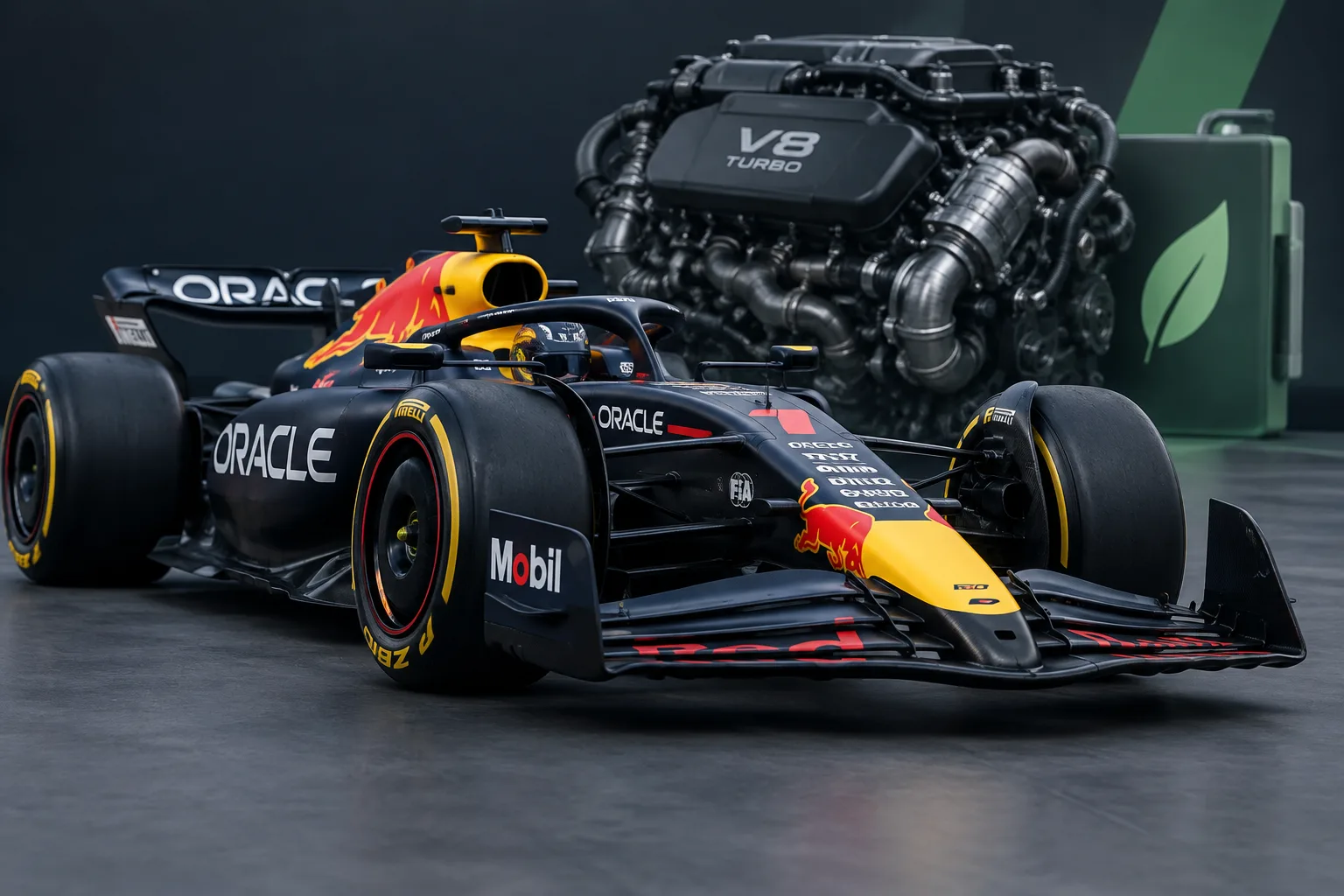
Conceptual AI-generated editorial motorsport illustration; not a documentary photograph or evidence that a pictured event, meeting or transfer occurred. · 2026-11-20GPBeat newsroom · News Made Clear generated illustration
All Formula 1 power-unit manufacturers have committed to a proposal for 2.1-litre V8 turbo-hybrids in 2030, the FIA says. The electric output ceiling would fall to 200kW from 350kW, although some details remain unresolved.
All Formula 1 power-unit manufacturers have committed to a proposal for 2.1-litre V8 turbo-hybrids in 2030, the FIA said Friday. Under the proposal, the new units would replace the current formula with a smaller electrical contribution. The framework’s central provisions are agreed, although some details remain open.
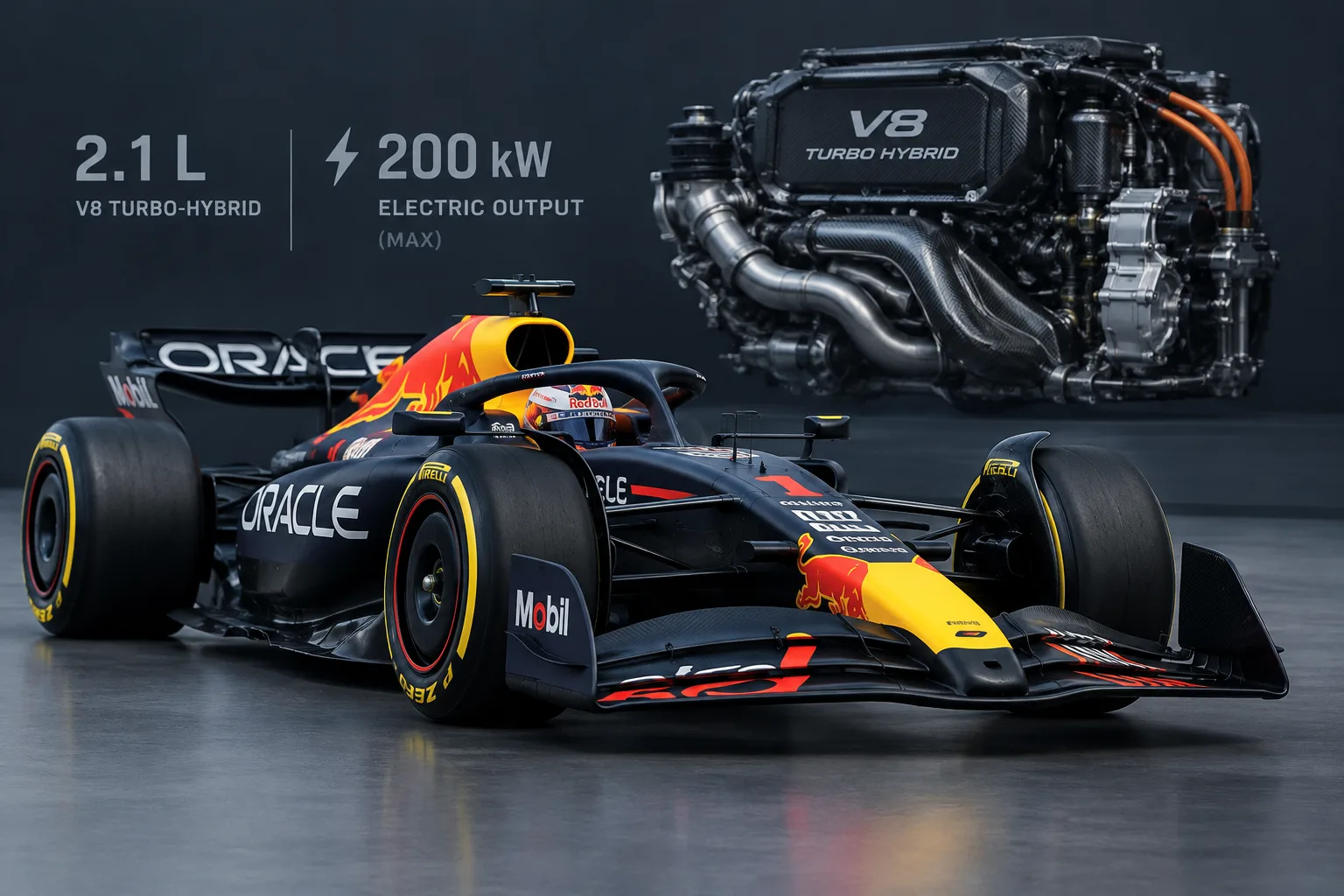
The 2.1-litre capacity builds on the current 1.6-litre V6 blocks by adding two cylinders, with lower development costs as the aim. Electric output would be capped at 200kW, down from 350kW under the current rules. Half would be available at all times, with the remainder reserved for overtake mode. Overall power is expected to remain similar to today’s: the combustion engine should produce about 780bhp, taking total output to just over 900bhp in standard running and 1,050bhp in overtake mode.
Reducing the electrical share is intended to address energy starvation, which drivers have criticized this year. The current rules divide power almost evenly between combustion and electricity; that split, combined with other choices in car architecture, can leave the system short of energy and power fading before the end of straights as batteries run low. Different charge levels can also prompt cars to swap positions. Advanced sustainable fuels, first used in 2026, will continue, and the FIA says the new unit is intended to be lighter, simpler and more cost-effective.
The package is a compromise. FIA president Mohammed Ben Sulayem initially pushed for a naturally aspirated engine without turbo or electrical components, while manufacturers wanted to retain turbocharging and a hybrid element. Turbocharging was considered important to reduce fuel consumption and, in turn, weight at the start of races. Keeping an electrical element alongside the turbo was also intended to maintain the engines’ relevance to road cars.
Despite the V8 configuration, the new engines are expected to sound broadly like today’s units. The louder sound associated with the previous V8 era, from 2006 to 2013, is unlikely to return.
General Motors, which backs Cadillac, will delay production of its new engine from 2029 to 2030. In return, GM will lose voting rights on current engine rules and be classified as a new manufacturer from 2030. Cadillac will continue using Ferrari customer engines through 2029.
Sources 01
- SOURCEF1 bosses close to V8 engines deal from 2030BBC Sport F1